
Why Production Chaos Happens And How ERP Stops It
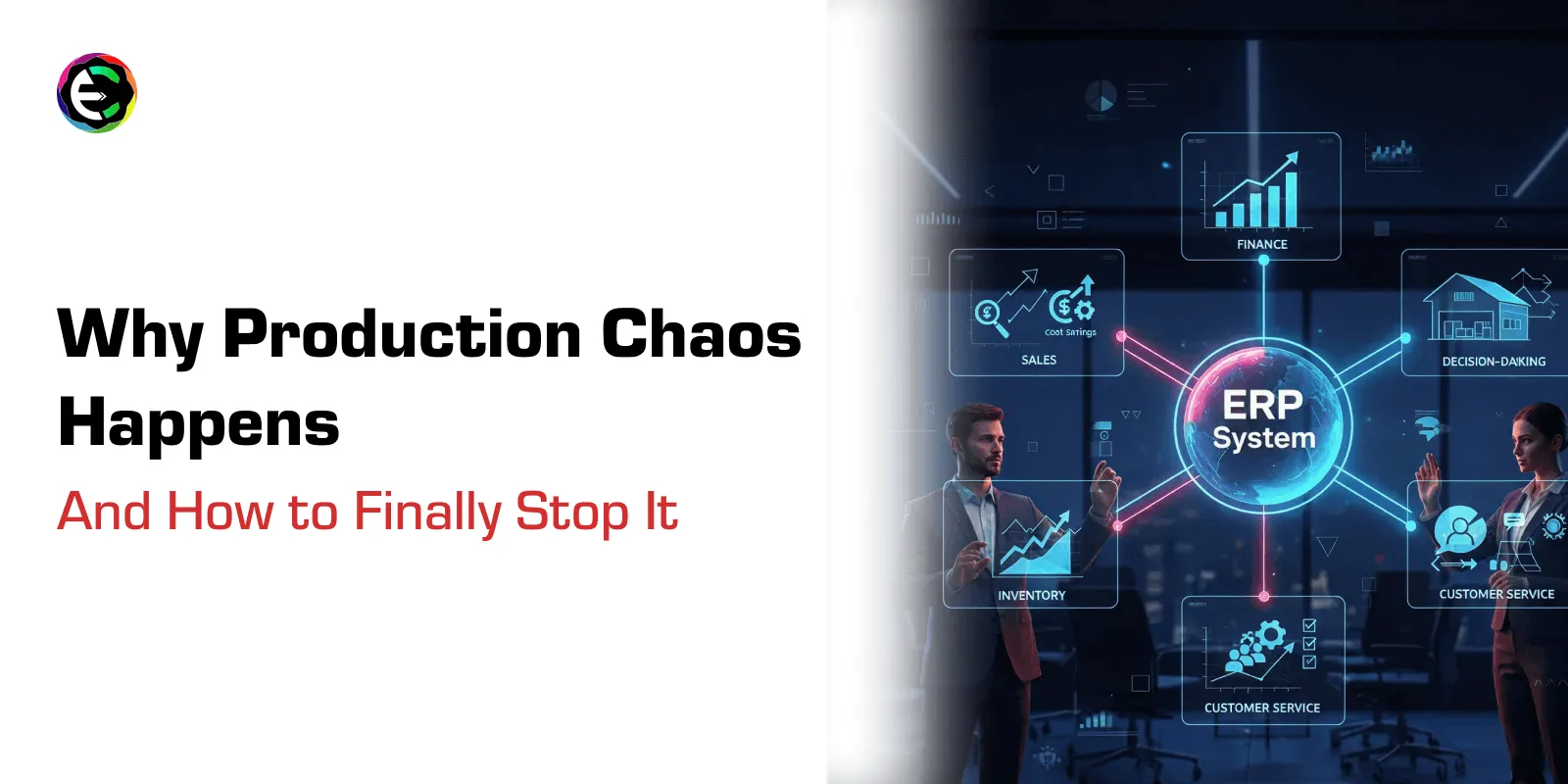
Every factory owner knows the feeling of the "morning panic." You walk onto the shop floor with a plan for the day, but within five minutes that plan is gone. A key machine is down, a worker is missing, or worst of all you are out of raw material that your spreadsheet said was in stock. This constant state of "firefighting" is exhausting. It feels like you are always reacting to problems instead of planning for growth. But this chaos is not just "part of the job." It is a clear sign that your business has outgrown its old methods.
So, Are You Mixing or Assembling?
The first step to fixing the chaos is understanding that not all manufacturing is the same. A generic spreadsheet cannot tell the difference between mixing paint and building a bicycle, but your system needs to know.
Process Manufacturing: This is for industries that follow a recipe or a formula, like food, chemicals, or pharmaceuticals. Once you mix the ingredients, you cannot take them apart again. You need specific ERP software for the process manufacturing industry to handle things like batch expiry dates, variable yields, and by-products. A simple list cannot track these complex chemical changes.
Discrete Manufacturing: This is for industries that assemble distinct parts, like electronics, pumps, or furniture. The best ERP system for discrete manufacturing focuses heavily on the BIll of Materials (BOM). It needs to track every single nut, bolt, and screw. If you are missing one tiny screw, you cannot ship the final product, which causes massive delays.
The "Invisible" Inventory Problem
The most common reason for missed delivery deadlines is the gap between what your computer says you have and what is actually sitting on the shelf. This "inventory blindness" causes two major problems that kill your cash flow.
The "Hoarding" Effect: When your production team does not trust the data in the spreadsheet, they start to hoard materials "just in case." They hide extra stock at their workstations. This means you are buying more materials than you need, which ties up your cash in stock that is just sitting there.
The "Ghost" Stock: The opposite problem is when you think you have stock, but it was actually used up yesterday and no one wrote it down. You accept a new order based on that "ghost" stock, only to realize later that you cannot make it. Manufacturing ERP solutions with inventory management are the only way to fix this visibility gap by automatically deducting stock the moment a job starts.
The "Too Small" Trap
Many owners fall into the trap of thinking that "systems are only for big corporations."This is a dangerous mindset. In reality, ERP software for small manufacturing businesses is actually more critical. A huge corporation has deep pockets and can survive a bad month of waste or a lost client. A small business operates on tighter margins. One base production run, one batch of spoiled ingredients, or one major missed deadline can hurt a small business deeply. You have less room for error, so you need better tools.
(Also Read: From Shop Floor to Top Floor: A Guide to ERP for Manufacturing)
Breaking the Chains of the Factory Floor
Old manufacturing systems kept you tied to a desk in the warehouse office. You had to be physically present to approve an order or check on a job status. Modern cloud-based ERP solutions for manufacturers give you your freedom back. These systems live on the secure internet, not just on one hard drive. This means you can see your live production status, check your inventory levels, and approve purchase orders from anywhere. You can manage your factory from your home or while you are visiting a client, giving you control without the need to micromanage.
Conclusion
Moving away from manual chaos is not just about buying a new piece of software; it is about maturing as a business. It is about building a system that runs smoothly without you having to watch every single step. When you trust your data, you can stop fighting fires and start building the future of your company. Join hands with ERP crystal, we have the perfect ERP to manage your type of industry. Visit our website to learn more about our manufacturing business ERP system Symphony.
📞 Need help figuring out if it's right for you? Contact us at +91 9867357300.